“Medical Technology Assessment of Covid-19 vaccination” – 27/5 2025
Prepared by National Board of Health with the patient association as a consulting party
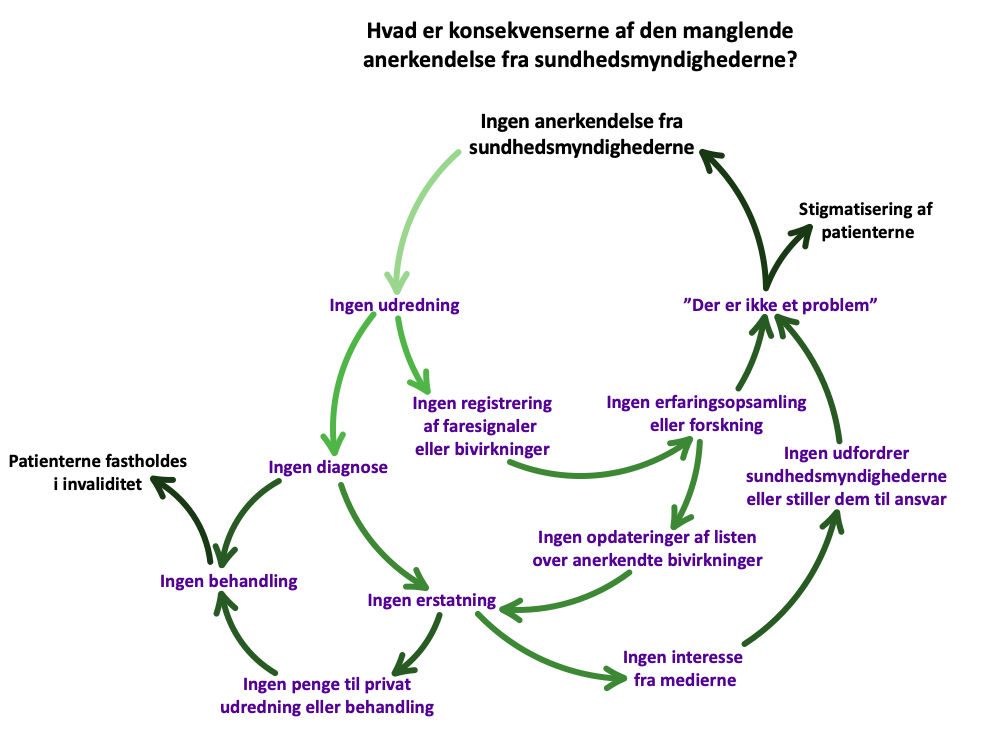
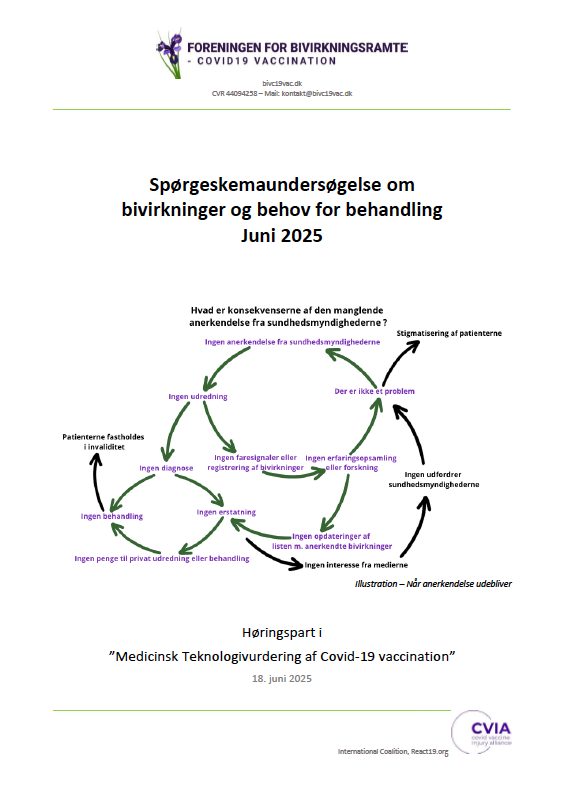
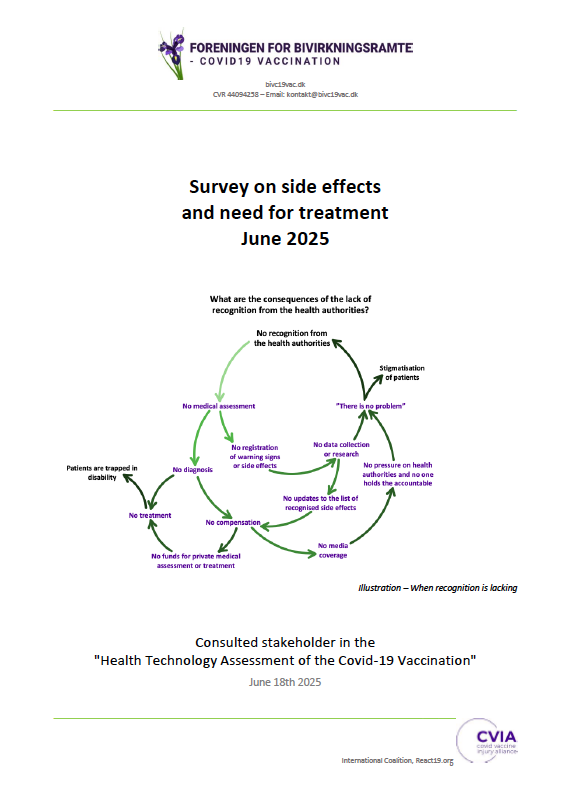
Illustration – When recognition is lacking
English version 
DEN ENDELIGE TEKNOLOGIVURDERING
Sundhedsstyrelsen har nu udgivet den endelige Teknologivurderingen, der blandt andet havde til formål “at vurdere effekten og sikkerheden ved de tilgængelige vacciner”.
De inviterede officielt Patientforeningen for bivirkningsramte som høringspart. Vi svarede med 13 siders høringssvar + en ny undersøgelse med 65 danskere, der stadig er syge efter vaccinen (juni 2025). Undersøgelse viste blandt andet:
• 84,6 % blev syge inden for den første uge efter stikket
• 38 % samme dag
• Gennemsnitlig sygdomsvarighed: 1.388 dage (næsten 4 år)
• 100 % er stadig ikke raske
• 70 % indberettede selv bivirkningerne – kun 30 % fik lægen til at gøre det
• 62 % har fået afslag på erstatning
• 62 % betaler selv for privat behandling, fordi det offentlige har lukket døren.
Hvad gør Sundhedsstyrelsen i den endelige MTV? De nævner os med én enkelt sætning:
“Flere høringssvar pegede på, at der mangler fokus på bivirkninger.”
Ingen opfølgning, ingen ny side, ingen reference, ingen tal, ingen undersøgelse og ingen anerkendelse af de 65 danskere, der har været syge i fire år, eller alle de bivirkningsramte der ikke deltog i undersøgelsen.
De har bogstaveligt talt slettet de bivirkningsramte fra den officielle vurdering af vaccinesikkerheden – i en rapport, der altså netop skulle vurdere sikkerheden.
Sundhedsstyrelsen har officielt skrevet 126 sider om vaccinesikkerhed – uden at nævne de syge med et eneste ord.
HEARING RESPONSE
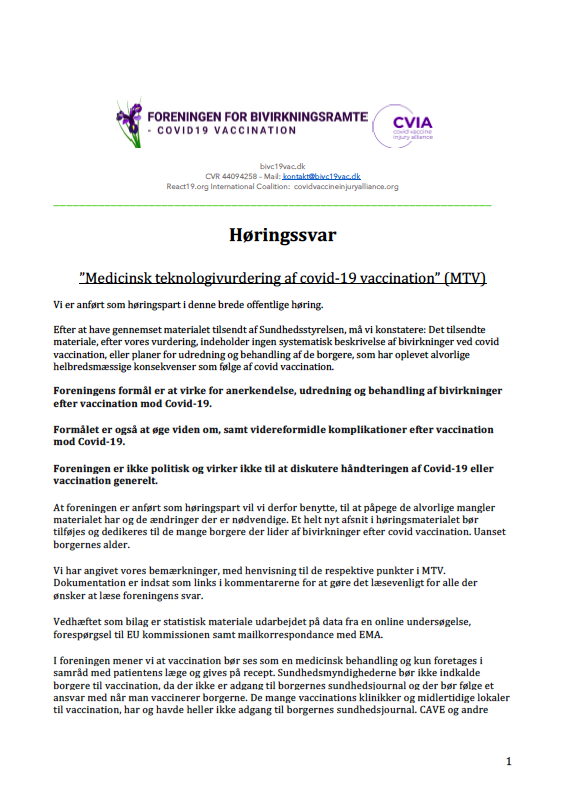
In connection with the association's invitation til at bidrage til ”Medicinsk Teknologivurdering af Covid-19 vaccination”(MTV), udarbejdede patientforeningen et høringssvar.
The HTA aims, among other things, to “assess the efficacy and safety of the available vaccines.” However, this assessment cannot be made without examining patients who experience severe and persistent symptoms.
The Danish Health Authority has in their draft to the MTV, it has been shown that they do not intend to help citizens who are affected after Covid-19 vaccination. Citizens' experiences and needs are largely absent from the assessment. The draft is based on citizens aged 65+. Other groups – including younger citizens and people with side effects or long-term health problems after vaccination – appear in the draft as secondary and are therefore overlooked. The MTV is neither representative nor comprehensive in relation to the entire population's experiences with Covid-19 vaccination.
We would therefore once again - and based on the data from the questionnaire survey, as well as the remaining attached annexes - strongly urge the health authorities to initiate the investigation and treatment of these patients, who are in an urgent health situation.
Høringssvaret og vedhæftede bilag findes herunder, og vores høringssvar kommer ligeledes til at ligge offentligt tilgængeligt på the consultation portal.

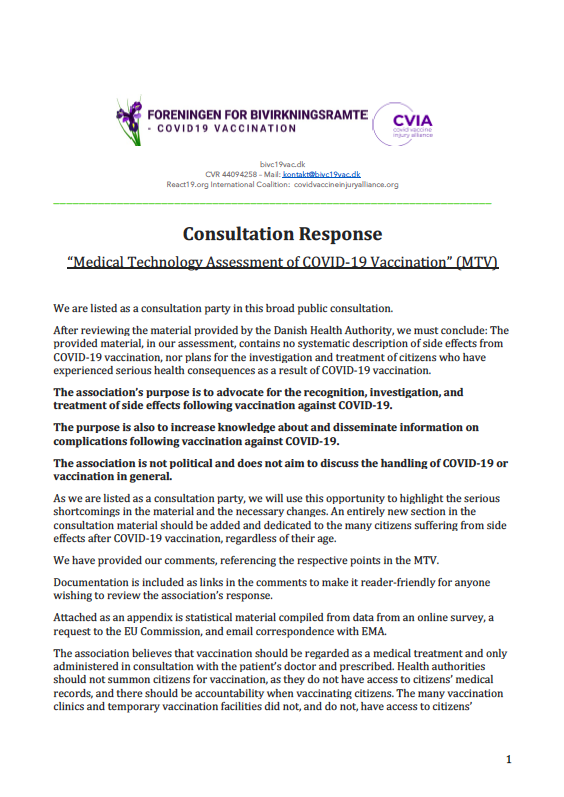
In connection with the preparation of the consultation response, the association has asked the citizens affected by the side effects about their current situation. 65 patients completed the questionnaire in the period 6-16 June 2025. Their responses provide insight into the situation of those affected by the side effects and reflect the problems that the rest of the patient group also experiences. It is clear that these are not mild and transient symptoms among the study participants.
The study also points to a significant underreporting of side effects, which weakens the professional basis for assessments such as those in the Danish Health Authority's HTA. It is therefore necessary that the situation of this patient group is systematically included in this assessment, as well as future assessments and decisions about Covid-19 vaccination.
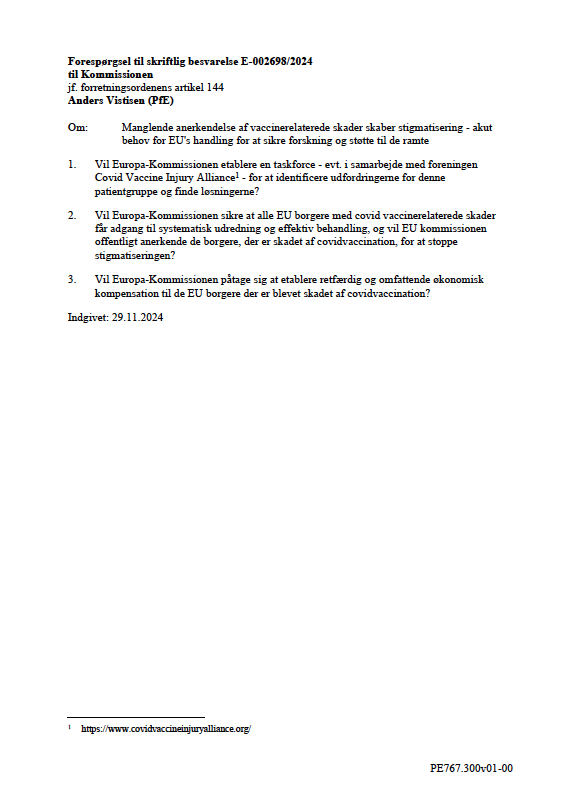
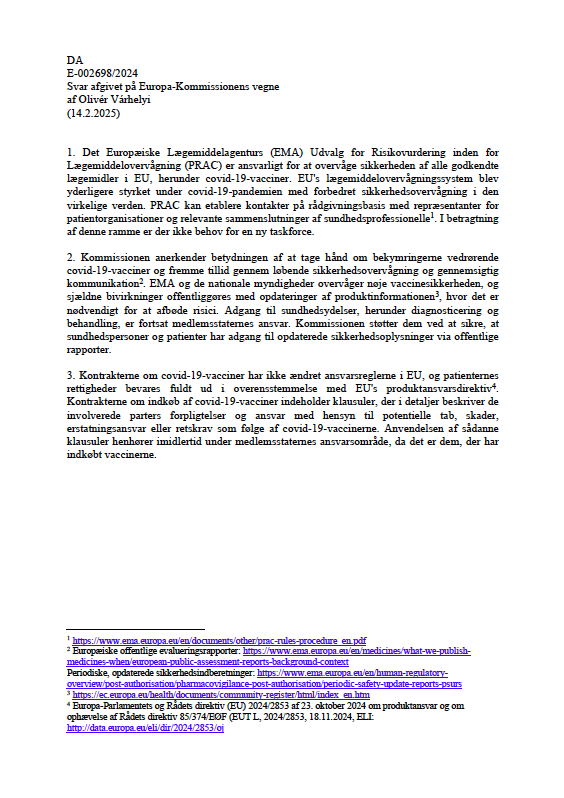
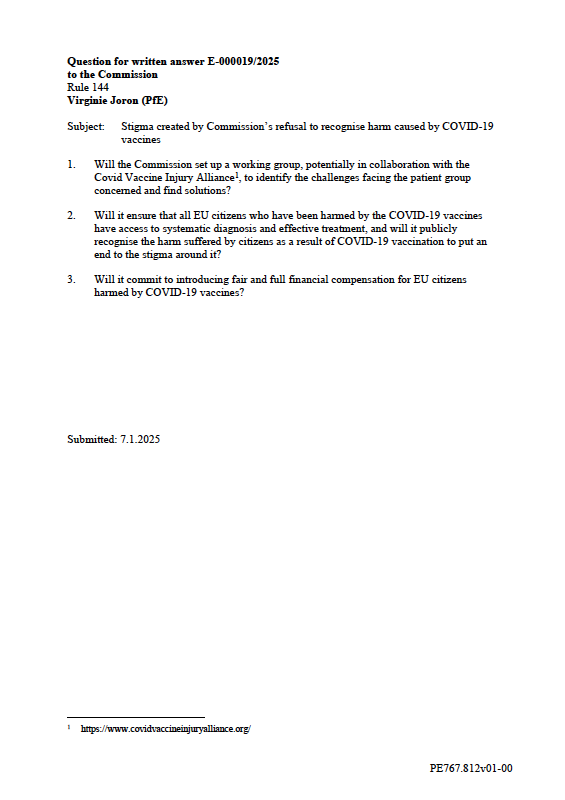
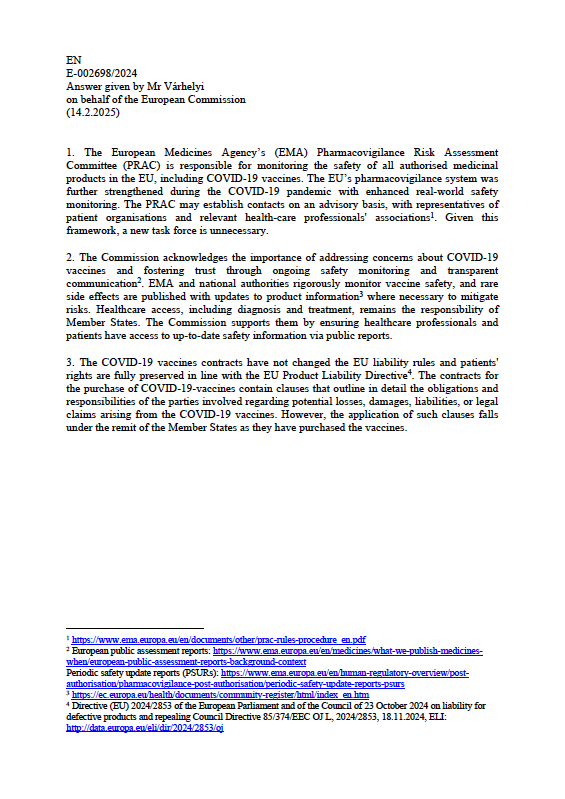
In November 2024, the Danish Patient Association sent a number of questions to the EU Commission on behalf of the Covid Vaccine Injury Alliance (CVIA). The EU Commission's response shows that the responsibility for investigation, treatment and compensation lies with the individual member states – not the EU. This means that the Danish National Board of Health and the Danish authorities themselves have a duty to act and cannot wait for a common EU solution.
The questions and their answers can also be found at European Parliament website.
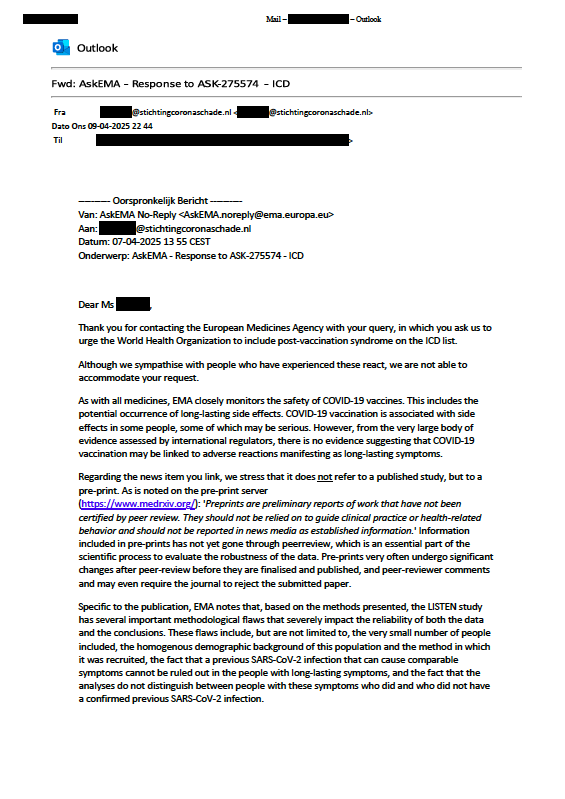
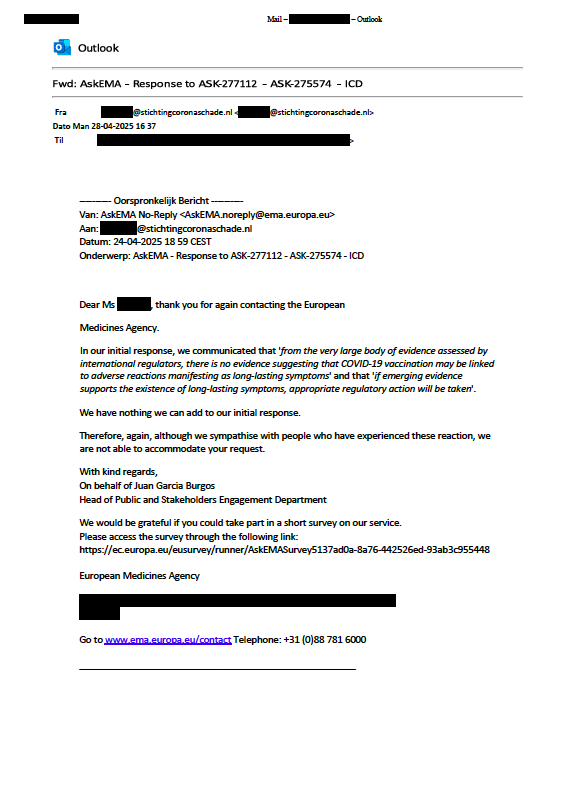
The email correspondence between the Covid Vaccine Injury Alliance Netherlands and the EMA documents that the European Medicines Agency (EMA) refuses to recognize post-vaccination syndrome (PVS) as a separate medical diagnosis, and thus also refuses to support an official ICD coding (diagnostic classification via WHO). The EMA refuses this despite the fact that thousands of patients in the EU report long-term symptoms after COVID-19 vaccination and that patient organizations have repeatedly requested official recognition in order to access treatment and compensation. This rejection has implications for:
- Lack of recognition and diagnosis at the national level – also in Denmark.
- The systemic invisibility of those affected by side effects in both healthcare systems and authorities' assessments.
- Da professional basis that national authorities use in their assessments, as in this case with the HTA from the Danish Health Authority. This entails a risk that relevant patient groups and symptom patterns are omitted because they are not found in official registers or recognized by international bodies.
The appendix thus emphasizes why it is necessary to include patient data, questionnaire surveys and experiences from patient associations in the HTA – as the authorities otherwise rely solely on institutions that currently deny the existence of PVS.
EMA is aware of the serious and long-term side effects with chronic sequelae of Covid-19 vaccination. It is EMA that continuously creates product summaries for these experimental vaccines, valid for the entire EU. EMA therefore refuses to create an ICD code for those citizens who experience these serious long-term side effects, which according to their own product summaries exist. If EMA believes that everyone who experiences serious long-term side effects and organ damage is cured, EMA should document that claim. Their rejection of the Dutch inquiry therefore casts doubt on EMA's professionalism and credibility as an authority. All medical products can cause serious, long-term and chronic side effects. The fact that the EMA maintains that the Covid-19 vaccines are the first product in history that does not have these long-term serious side effects is evidence of a lack of scientific approach.
The cover letter to the Danish Health Authority accompanies the patient association's consultation response to the Medical Technology Assessment of Covid-19 vaccination. The letter lists the attached annexes documenting the patients' health situation, as well as international inquiries and responses from the EU Commission and EMA.